Skip to content
Today in this article, we will be discussing the different types of HVAC systems that are available. Before going to the various HVAC system types, let’s first discuss what an HVAC system is and why it is used. HVAC system stands for heating, ventilation, and air conditioning. The HVAC system is responsible for maintaining the temperature in your house. They cool the home during summer and retain the heat during winters.
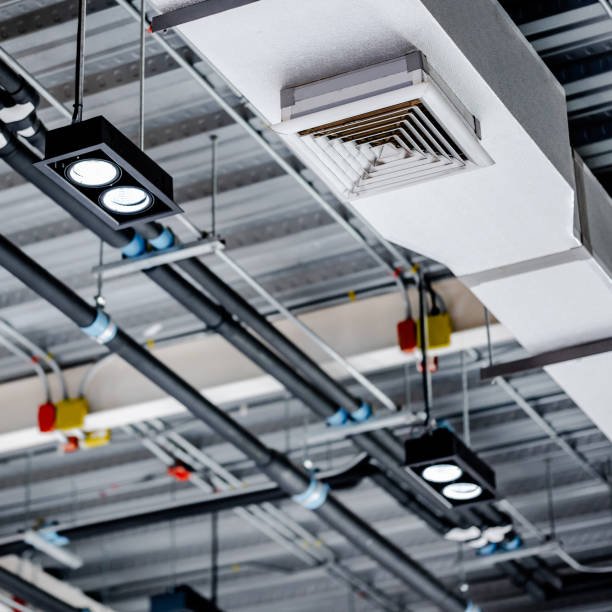
The products that are included under the HVAC system are air conditioners, heat pumps, ductwork, thermostat, furnaces, and many other appliances to maintain the optimum temperature in your house. You can find these systems everywhere, starting from a single-family home to hospitals, offices, and even submarines. The HVAC system is built using the principles of fluid mechanics, heat transfer, and thermodynamics.
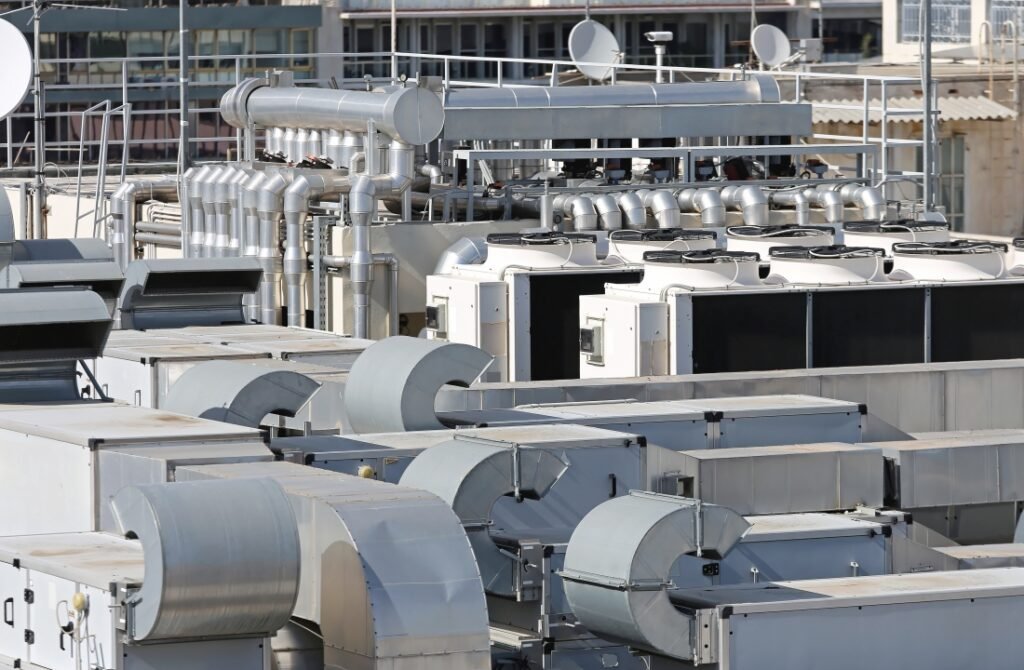
The Different Types of HVAC Systems Available
Different types of HVAC systems are available for various purposes. Four main types of education systems have duct-free systems, hybrid split systems, and packaged heating and air systems. All the systems have their advantages as well as disadvantages. To choose the right HVAC system for your house, you should book an appointment with an HVAC duct manufacturer. Let’s go through these systems one by one:-
Heating and cooling system
This is the most common type of HVAC system that is found everywhere. From the name, you can understand that this system has two units. One system is for cooling and the other system for heating. These systems have an indoor unit for heating and an outdoor unit for cooling purposes. The cooling system that is placed outdoors uses compressors and coils, and refrigerant to cool the air, and a fan to blow the hot air away.
The heating system is usually placed in the garage or the storeroom. The heater uses gas to produce heat and distributes the hot air to the other rooms by a fan or evaporator. This HVAC system also offers an additional service to manage the temperature and control the temperature according to your preference. You can install this HVAC system in your homes as well as offices.
Hybrid Split System
The hybrid split system has features similar to that of the split system. Many people prefer this system as it can reduce energy costs with the electric hybrid heating system. The main difference that separates this system from the split system is that there is an option to switch between the gas power, which is more and more complete, to electric, which offers more efficiency and is quiet. You can decide how you want to heat your house. It is usually installed in homes in areas with mild climate as you can use it in this system that traditional ducts and thermostat. This HVAC system has all the benefits of a split system. Plus, you have the additional option to save energy and reduce utility bills.
Duct Free System
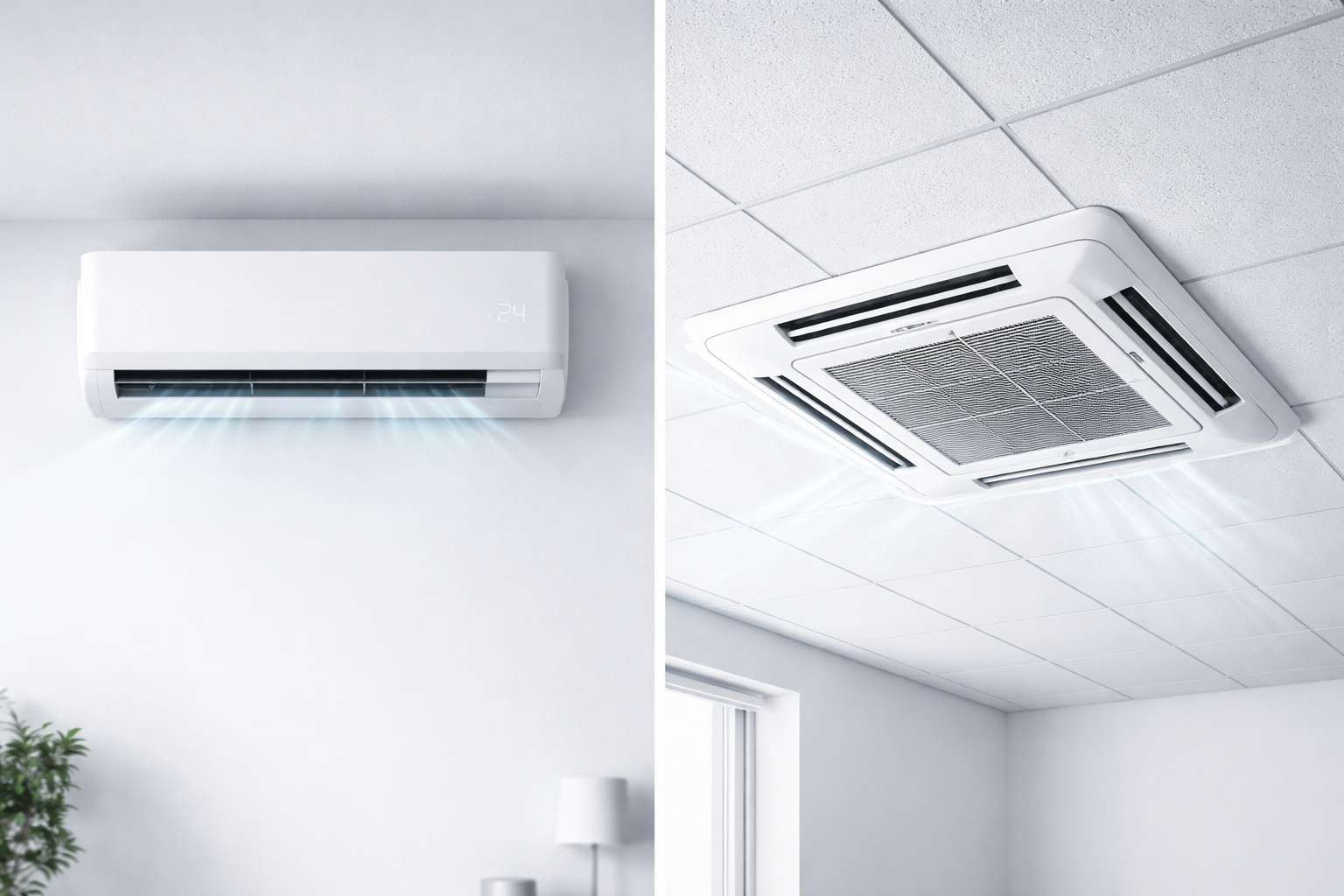
This HVAC system is also called the Mini-split system. The duct-free system comes with a lot of benefits and disadvantages. This system has individual units which can be placed in separate rooms. The temperature in different rooms can be controlled separately. This duct-free system can be installed on the wall, and they have a compressor that can be installed outdoors.
The disadvantage is that the installation process of the duct-free system is a bit expensive. These units can be installed in your houses, garages, restaurants, and venues with tenants. The duct-free system does not waste energy on regulating the temperature outside the rooms.
These systems have to be cleaned regularly. Do not try to clean this by yourself as it can damage the duct, and replacing it can be very expensive. Book an appointment with an HVAC service center to clean your HVAC system.
Packaged Heating and Air System
Packaged heating and air system is a contained heating and air unit inside the house. You can place it in the attic or the storage space. It can cool and heat the whole home. This system has a compact structure that allows it to be placed anywhere in the house. The packaged heating and air system is efficient and can be maintained easily. This HVAC system is generally used in areas where the climate is warm as the heating option is not as powerful as the other systems. In this system, the heat is generated electrically, whereas, in the different systems, gas is used to create heat.
The Different Types of Commercial HVAC systems
Earlier, we discussed the various types of HVAC systems that are usually found in houses. The different types of commercial HVAC equipment used are a single split system and a Multi-Split system air conditioning. The single split system is used for small commercial buildings, and it is less expensive, versatile, and energy-efficient. The multi-split system air conditioning works similar to that of the single split system. In a multi-split system, you can connect many indoor units to a single outdoor unit. You can see this type of system used in larger commercial establishments such as restaurants, malls, and offices. If you have fewer indoor and outdoor units, the lesser space it takes. Multi-split system air conditioning is more expensive compared to the single split system.
1. Single Split System
A single split system consists of one indoor unit connected to one outdoor unit. It is commonly used in small commercial buildings, such as offices, retail outlets, or small restaurants. The advantages of a single split system include:
- Lower initial cost compared to multi-split setups
- Energy efficiency for small to medium-sized spaces
- Versatility and simplicity in installation and maintenance
This system is ideal when the building requires cooling or heating in a limited number of zones and where cost-efficiency is a priority.
2. Multi-Split System
A multi-split system operates similarly to a single split system but allows multiple indoor units to be connected to a single outdoor unit. It is commonly used in larger commercial establishments, such as shopping malls, restaurants, and multi-office complexes. Key features include:
- Ability to control multiple indoor zones independently
- Space-saving design, as fewer outdoor units are needed
- More complex installation and higher initial investment compared to a single split system
Multi-split systems are ideal for commercial buildings that require flexible temperature control across multiple areas while minimizing the space taken by outdoor units.
At Envigaurd, we design and install commercial HVAC systems that optimize energy efficiency, comfort, and space utilization, ensuring each system meets the operational requirements of the facility.
How do different types of HVAC systems compare in cost and performance?
| System Type | Initial Cost | Energy Efficiency | Recommended For |
|---|---|---|---|
| Split Systems | Low | Moderate | Small offices, retail outlets |
| Packaged Systems | Medium | Good | Commercial buildings, malls |
| VRF/VRV Systems | High | Excellent | Corporate offices, hospitals, tech parks |
| Chiller + AHU Systems | High | Very High | Industrial, pharma, and institutional setups |
Envigaurd’s engineering team performs a cost-benefit analysis to recommend the most energy-efficient and compliant solution for each facility.
Conclusion
Now that we have reached the article’s conclusion, you must be aware of the different HVAC systems available in the market. If you think about buying an HVAC system for your house, you should contact an HVAC duct manufacturer. If you are looking to install an HVAC system in a warehouse, you can combine the HVAC system with other ventilation options. You can install big ceiling fans with high speed and low speed to reduce the temperature in your warehouse. Make a list of all the features you want in an HVAC system and choose the right one that meets all your needs. Irrespective of the HVAC system you install, you need to maintain and clean the systems regularly to ensure the proper functioning of the HVAC system. If you do not maintain the HVAC system regularly, it can affect the system’s life span.
1. What are the four main types of HVAC systems?
The four major types of HVAC systems are:
Split System: The most common setup, with separate indoor and outdoor units for heating and cooling.
Hybrid Split System: A dual-energy system that combines electricity and gas for improved efficiency.
Duct-Free (Mini-Split) System: Ideal for spaces without ductwork or where zoning control is required.
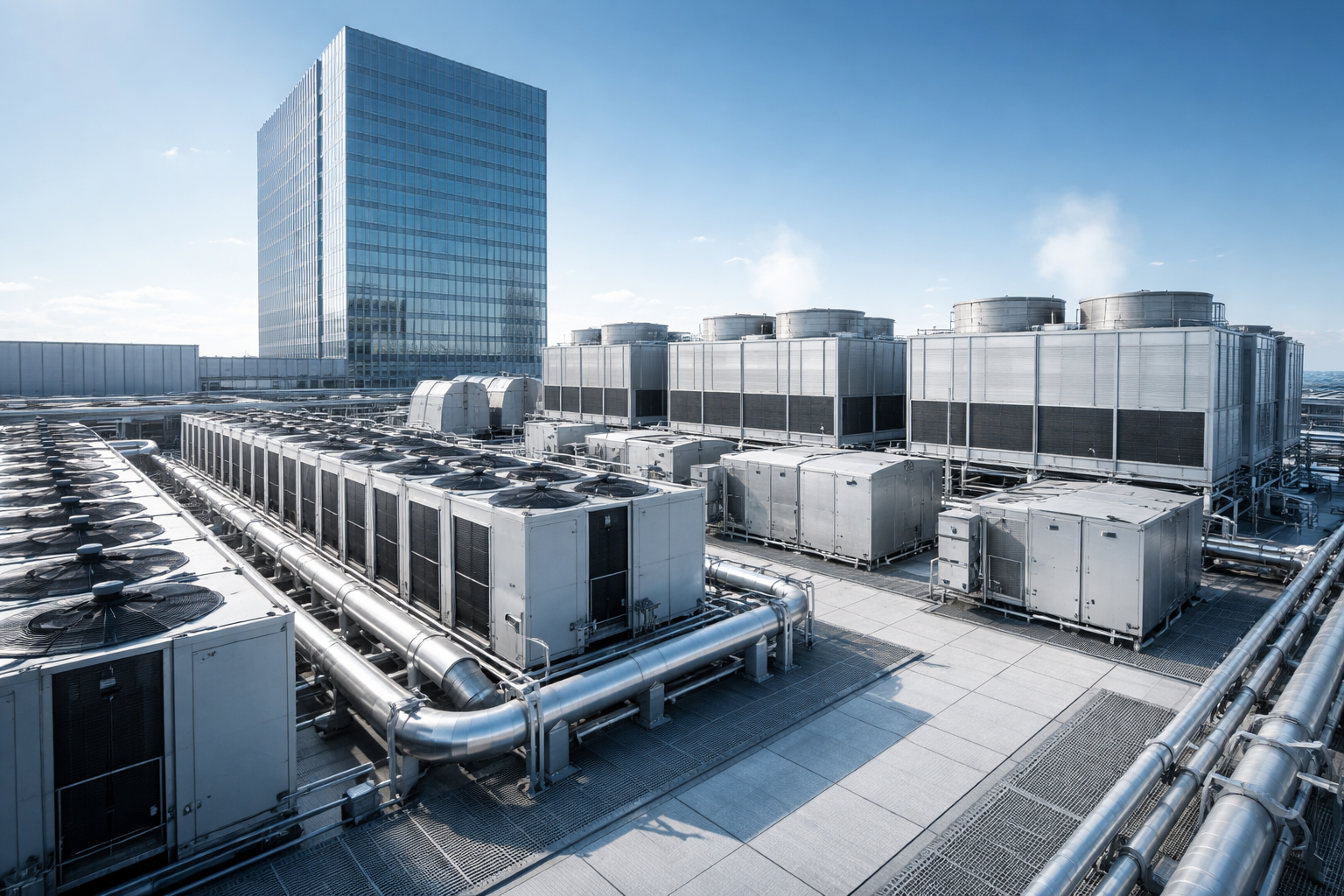
Packaged HVAC System: A self-contained rooftop or ground-mounted unit widely used in commercial spaces.
Each system type is designed to balance thermal comfort, space constraints, and energy efficiency, depending on the building’s function.
2. How many types of HVAC systems are there overall?
While there are four primary residential HVAC configurations, in commercial and industrial applications, the range expands to include VRF/VRV systems, chiller-AHU combinations, rooftop packaged units (RTU), VAV/CAV systems, and dedicated fresh air units (FAHU).
At Envigaurd, we classify systems based on load profile, process sensitivity, air quality requirements, and operational hours, ensuring precise environmental control and optimized lifecycle cost.
3. What are the different types of commercial HVAC systems?
Commercial HVAC systems vary depending on building scale and use case:
> VRF/VRV Systems: Allow multiple indoor units with independent zone control and superior part-load efficiency.
> Chiller + AHU Systems: Ideal for large facilities, integrating chilled water loops and centralized air handling.
> Packaged Rooftop Units (RTU): Compact, factory-assembled systems preferred for commercial offices and retail spaces.
> VAV (Variable Air Volume) and CAV (Constant Air Volume) Systems: Used to manage ventilation air dynamically across zones.
Envigaurd designs and installs all major system types to meet ASHRAE, ISHRAE, and NABL environmental standards.
4. Which type of HVAC system is best for industrial applications?
For industrial and process-based environments such as pharmaceuticals, chemical plants, R&D labs, or food facilities, the best option is a chiller-AHU-based centralized HVAC system.
These systems can integrate HEPA filtration, humidity control, and fresh air management to maintain strict cleanroom or controlled environment conditions.
Envigaurd’s industrial HVAC systems are designed to ensure temperature stability, particulate control, and energy compliance in line with ISO and GMP standards.
5. What type of HVAC system do I have?
You can identify your HVAC system by checking:
Indoor unit type: Furnace, AHU, or fan coil unit.
Outdoor unit: Condensing unit, chiller, or VRF outdoor module.
Air distribution method: Ducted or ductless.
For accurate identification, Envigaurd provides on-site HVAC audits that document your existing setup, system efficiency, and upgrade potential to help optimize performance.
6. What are the different types of heating and cooling systems in HVAC?
Heating systems include boilers, heat pumps, and gas-fired furnaces, while cooling systems comprise air-cooled chillers, water-cooled chillers, and split air conditioners.
Modern commercial HVAC designs integrate both using automation and variable frequency drives (VFDs) for precise temperature regulation and reduced power consumption.
7. What are the key HVAC services required for these systems?
Every HVAC system requires a structured service plan to ensure reliability:
Design and Load Assessment: Calculation of thermal and ventilation loads based on occupancy and process.
Turnkey Installation and Commissioning: Covering ducting, piping, insulation, and control integration.
Annual Maintenance Contracts (AMC): Periodic servicing, filter replacement, and system calibration.
Retrofit and Energy Optimization: Upgrading existing systems with efficient compressors, VFDs, or smart controls.
Envigaurd delivers complete lifecycle services from design and execution to post-installation support.