Skip to content

Key Highlights
- An air handling unit (AHU) plays a crucial role in HVAC systems by conditioning and distributing indoor air to ensure optimal air quality and comfort.
- Understanding the working principle of an AHU involves recognizing its components, including air intake, filtration, cooling/heating coils, and humidity control mechanisms.
- Effective air flow management within the AHU helps balance temperature, humidity, and cleanliness levels across various indoor spaces.
- Routine maintenance of the AHU is essential for enhancing energy efficiency and prolonging the lifespan of the system.
- Familiarizing yourself with the operation and control of an AHU is key to achieving a comfortable indoor environment.
Introduction
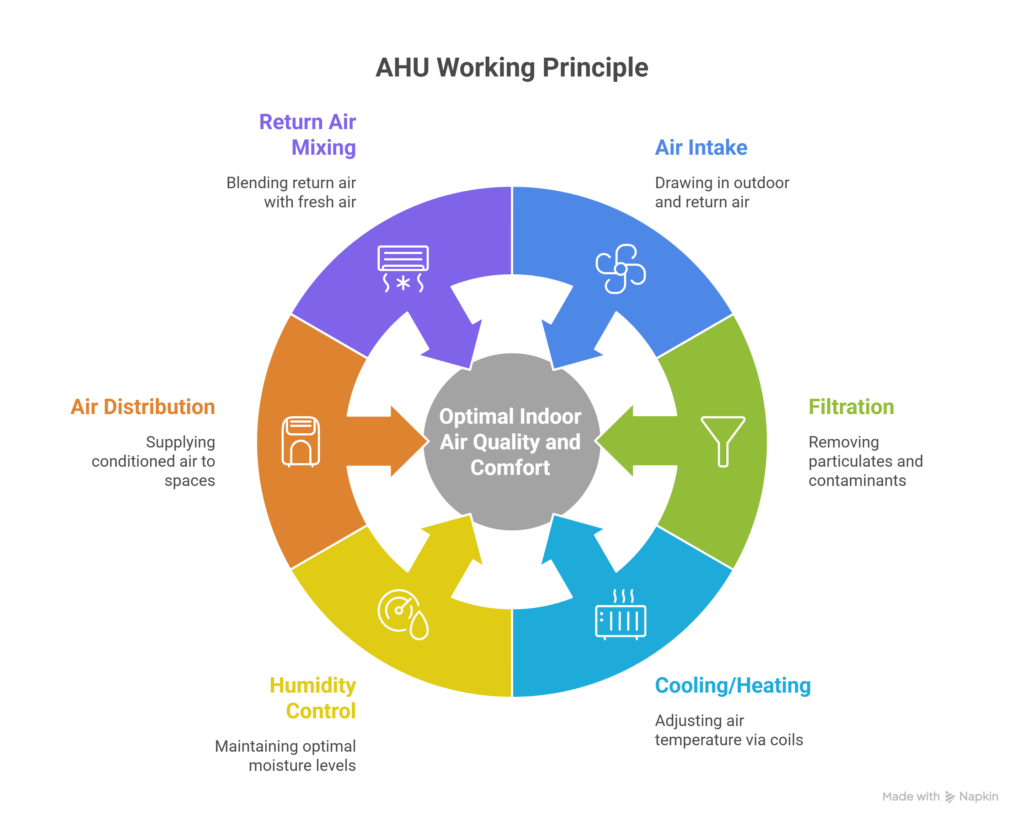
An air handling unit (AHU) is a vital component of HVAC systems responsible for regulating and circulating air within spaces. The working principle begins with air intake, where the AHU draws in outside air and return air for conditioning. Filtration follows, removing particulates to ensure air quality. Heating or cooling coils then adjust the temperature of the air, after which humidity control measures maintain appropriate moisture levels. Finally, the conditioned air is distributed throughout the building, and return air mixing enhances energy efficiency by reintroducing used air into the system.
For projects that demand reliability, compliance, and performance at scale, Envigaurd delivers end-to-end HVAC contracting services tailored for commercial and industrial facilities. From AHU selection and system design to installation, testing, and commissioning, Envigaurd ensures optimized airflow, energy efficiency, and long-term operational stability. Whether it’s office buildings, manufacturing plants, data centers, or process-driven industrial environments, Envigaurd’s HVAC solutions are engineered to meet real-world load conditions, regulatory requirements, and business-critical uptime expectations.
AHU Working Principle Explained Step-by-Step
Air Handling Units (AHUs) are essential components in HVAC systems, responsible for regulating and circulating air throughout commercial and industrial spaces. The working principle of an AHU involves several strategic steps that ensure optimal indoor air quality and comfort. Air intake begins by drawing in outdoor and return air. This air then passes through filters, which eliminate particulates and contaminants. Through heating or cooling coils, the temperature of the airstream is adjusted. The unit then controls humidity to maintain moisture levels before the conditioned air is distributed to various zones. Lastly, return air mixing facilitates energy conservation, allowing for more efficient operation. Key components include filters for air cleanliness, coils for temperature control, dampers for airflow regulation, and the blower fan that moves air through the system. Humidity control can be maintained with humidifiers or dehumidifiers, while mixing boxes seamlessly integrate fresh and return air. Control sensors monitor conditions, enhancing energy efficiency. Practical insights for commissioning AHUs include ensuring proper installation and addressing specific needs of different buildings. Regular maintenance practices, such as filter replacement and system checks, help sustain performance over time. Real-world applications of AHUs:
- Hospitals requiring stringent air quality standards
- Cleanrooms in pharmaceuticals that demand high filtration
- Commercial buildings for efficient energy use and comfort
- Data centers where temperature and humidity control is critical
- Industrial buildings necessitating versatile air handling solutions By understanding the step-by-step working principle of AHUs along with their components, one can effectively optimize
Air Intake: Drawing in Outdoor and Return Air
An air handling unit (AHU) serves as a critical component in HVAC systems by managing airflow throughout a building. During the air intake phase, the AHU draws in a mix of outdoor air and return air from the interior spaces. This process ensures that fresh, conditioned air circulates within the environment while minimizing energy consumption. The outdoor air enters through dampers, which regulate its volume based on demand. Return air is also integrated to optimize energy efficiency, facilitating the mixing process that balances temperature and humidity before distribution. This approach enhances overall indoor air quality and comfort levels.
Filtration: Removing Particulates and Contaminants
Effective filtration is crucial in air handling units (AHUs) for maintaining indoor air quality. This process involves utilizing various types of filters, such as HEPA filters, panel filters, and bag filters, to capture particulates and contaminants from incoming air streams. By removing dust, pollen, and other pollutants, these filters ensure that only clean, conditioned air circulates within a space. Regular maintenance and timely replacement of air filters are vital for sustaining optimal airflow and system efficiency, ultimately contributing to a healthier indoor environment and reducing energy consumption.
Cooling/Heating: Temperature Adjustment via Coils
Temperature adjustment within an air handling unit (AHU) relies heavily on coils dedicated to cooling and heating processes. Chilled water or refrigerant circulates through cooling coils, absorbing heat from the air, which results in a lower air temperature. Conversely, heating coils warm the passing air using hot water or electric heat. This temperature modulation ensures the indoor environment remains comfortable and energy-efficient. The efficient functioning of coils directly influences overall energy consumption, highlighting their critical role in HVAC systems. By balancing heating and cooling effectively, AHUs contribute to optimal air quality and user comfort.
Humidity Control: Maintaining Optimal Moisture Levels
Humidity control ensures that indoor environments maintain optimal moisture levels for comfort and health. An air handling unit (AHU) effectively manages humidity by incorporating humidifiers or dehumidifiers into its system. During operation, the AHU monitors moisture levels through control sensors, making adjustments as necessary. By maintaining the right humidity, the AHU enhances indoor air quality, reduces the risk of mold growth, and improves overall comfort. This balance is especially critical in commercial settings such as hospitals and cleanrooms, where precise humidity levels are essential for processes and patient well-being.
Air Distribution: Supplying Conditioned Air to Spaces
Conditioned air is essential for maintaining optimal indoor environments in various settings. An air handling unit (AHU) plays a critical role in this process by distributing air that has been properly filtered, cooled, heated, and humidified. Through a system of ducts, the AHU ensures that the conditioned air reaches specific zones within a building efficiently. The supply fan propels air through these ducts, while dampers regulate airflow based on the demands of different areas. Such precise air distribution contributes to energy efficiency and enhances indoor air quality, vital for spaces like hospitals and commercial buildings.
Return Air Mixing: Energy Conservation and Efficiency
Efficiency in HVAC systems hinges on the process of return air mixing, a pivotal mechanism employed within air handling units (AHUs). By blending the return air with fresh outside air, energy conservation is achieved effectively. This not only reduces the load on cooling and heating coils but also enhances indoor air quality. Optimizing return air mixing helps maintain a balanced indoor environment while minimizing energy consumption. Key aspects include adjustable dampers for precise airflow control, which also aid in creating different zones that cater to specific climate needs within large commercial buildings.
What is an Air Handling Unit (AHU)?
An Air Handling Unit (AHU) is a vital component of HVAC systems, responsible for circulating and conditioning air. It works by filtering, heating, cooling, and distributing air throughout indoor spaces to ensure optimal comfort and air quality for occupants.
Concise Definition of AHU in HVAC Systems
An Air Handling Unit (AHU) is a key component in HVAC systems responsible for regulating and circulating air within a building. It functions by drawing in outdoor and return air, then conditioning it through processes like filtration, heating, cooling, and humidity control before distributing it to different areas. The main components of an AHU include filters that remove particulates, cooling and heating coils that adjust air temperature, and a blower fan that facilitates air movement. Additionally, dampers regulate airflow, while control sensors ensure operational efficiency, improving indoor air quality and energy performance significantly.
Role of AHUs in Indoor Air Quality and Comfort
An air handling unit (AHU) plays a vital role in enhancing indoor air quality and ensuring comfort within various settings. By effectively managing air circulation and filtration, the AHU contributes to healthier environments. These units draw in both outdoor and return air, using high-efficiency filters to remove particulates and contaminants. Subsequently, they condition the air through cooling or heating coils, maintaining optimal temperatures and humidity levels. With an efficient air distribution system, AHUs ensure that clean, comfortable air reaches all areas, enhancing indoor environments for occupants.
Common Applications of AHUs in India
A variety of sectors in India benefit from the efficiency and control provided by air handling units (AHUs). Common applications include:
- Commercial Buildings: Ensuring comfortable temperatures and air quality in offices, shopping malls, and other public spaces.
- Hospitals: Maintaining strict indoor air quality standards crucial for patient health and comfort.
- Data Centers: Regulating temperature and humidity to protect sensitive electronic equipment.
- Pharmaceutical Facilities: Providing cleanroom environments necessary for production and testing.
- Industrial Plants: Supporting specific HVAC requirements for manufacturing processes and employee safety. These implementations highlight the versatility and importance of AHUs in enhancing indoor environments.
Key Components of an Air Handling Unit
An air handling unit (AHU) is a vital component in HVAC systems, responsible for regulating and circulating air as part of heating, cooling, and ventilation processes. Key components include filters that trap particulates and improve air cleanliness, coils that heat or cool air, and blowers that ensure effective air distribution. Dampers regulate airflow while mixing boxes allow fresh and return air to blend efficiently. Additionally, humidifiers maintain optimal humidity levels, and control sensors ensure the system operates within desired parameters for comfort and energy efficiency. Practical project insights include proper sizing for airflow needs, commissioning protocols, and routine maintenance checks to optimize performance.
Filters: Types and Functions
Filters play a pivotal role in maintaining air quality within an air handling unit (AHU). They come in various types, such as HEPA filters, bag filters, and panel filters, each serving specific functions to remove particulates and contaminants from the air. HEPA filters are essential for capturing fine particles, ensuring clean airflow in sensitive environments like hospitals and cleanrooms. Bag filters offer high dust-holding capacity, while panel filters are suited for general-purpose applications. By effectively managing the air cleanliness, these filters contribute significantly to the overall efficiency and performance of HVAC systems.
Heating and Cooling Coils: Purpose and Operation
Essential for temperature modulation in an air handling unit, heating and cooling coils operate by transferring heat to or from the supplied air. The chilled water or hot water flows through these coils, adjusting the air temperature to achieve desired comfort levels. As air passes over the coils, it either cools down or heats up, depending on the designated function. This process plays a vital role in maintaining indoor air quality and energy efficiency, particularly in large commercial buildings where temperature consistency is paramount. Proper maintenance ensures optimal performance and longevity of these critical components.
Blower (Fan): Air Movement and Distribution
The blower, or fan, is a critical component of an air handling unit (AHU), responsible for the effective movement and distribution of air throughout the system. By generating airflow, it facilitates the circulation of conditioned air, ensuring that different areas receive optimal temperature and humidity levels. Equipped with varying capacities, blowers can adapt to the specific needs of a space. They work in tandem with filters and coils to maintain air cleanliness and temperature control, ultimately enhancing indoor air quality and energy efficiency within commercial and industrial environments.
Dampers: Airflow Regulation
In an air handling unit (AHU), dampers serve a critical role in regulating airflow throughout the system. These components can be adjusted to either restrict or allow the passage of air, ensuring optimal air distribution according to varying demands. By modulating the flow during temperature changes or occupancy fluctuations, dampers enhance energy efficiency and maintain indoor air quality. Furthermore, dampers facilitate the balancing of fresh and return air, contributing to an even supply across different zones. This modulation improves comfort levels and plays a vital role in achieving desired system performance.
Mixing Box: Fresh and Return Air Integration
Integrating fresh and return air is a critical function of the mixing box within an air handling unit. This component seamlessly blends outdoor air with the return air from the conditioned space, optimizing indoor air quality and enhancing energy efficiency. By utilizing adjustable dampers, the mixing box can control the proportions of fresh and used air, ensuring proper ventilation based on real-time demand. This process reduces energy consumption while maintaining comfortable air conditions, making the mixing box essential in large buildings like commercial spaces and industrial facilities.
Humidifier and Dehumidifier: Humidity Control
Within an air handling unit (AHU), humidity control is essential for maintaining ideal indoor conditions. Humidifiers add moisture to the air when humidity levels drop, ensuring comfort and preventing dryness that can affect both health and materials. Conversely, dehumidifiers extract excess moisture to combat humidity spikes, reducing the likelihood of mold and contributing to a healthier environment. By regulating humidity, AHUs support optimal air quality, promote energy efficiency, and enhance overall comfort within various spaces, aligning with the specific needs of occupants and the operational requirements of commercial and industrial settings.
Control Sensors and Safety Features
Control sensors and safety features are integral to maintaining the efficiency and safety of an air handling unit (AHU). These components monitor various parameters such as temperature, humidity, and airflow, ensuring that the system operates within specified limits. Sensors provide real-time data, enabling automatic adjustments to maintain optimal indoor air quality and comfort. Safety features like high-temperature cutoffs and airflow sensors prevent overheating and equipment failure. Collectively, these elements enhance system reliability, improve energy efficiency, and minimize operational disruptions, making them crucial for effective AHU functionality in commercial buildings.
Beginner’s Guide: How to Understand and Operate an AHU
Air Handling Units (AHUs) are essential components of HVAC systems, designed to condition and circulate air within various environments. Understanding their operation begins with identifying main components such as filters, coils, and fans. The air handling process initiates with air intake, drawing in outside air alongside return air for circulation. Filtration follows to ensure air cleanliness, removing various particulates. Temperature adjustments occur next via heating or cooling coils, maintaining optimal indoor climates. Humidity control is then achieved, ensuring balanced moisture levels. Finally, the system distributes conditioned air efficiently throughout spaces, incorporating return air mixing for energy conservation.
What You Need to Get Started (Equipment and Resources)
To effectively operate an air handling unit, several essential pieces of equipment and resources are necessary. A reliable set of tools, including screwdrivers, wrenches, and multimeters, allows for efficient maintenance and troubleshooting. Additionally, having access to quality filters, such as HEPA or panel filters, ensures optimal air cleanliness. Lastly, resources like HVAC software or manuals can aid in understanding the system’s design and operational parameters. Equipping yourself with these tools and information is crucial for effective AHU management.
Step-by-Step Guide to AHU Operation and Understanding
An air handling unit (AHU) is a crucial HVAC component that conditions and circulates air throughout a building. Understanding its operation is essential for maintaining indoor air quality and energy efficiency. Begin with air intake, where outdoor and return air are drawn in, followed by filtration to eliminate particulates. Next, cooling or heating coils adjust the air temperature, while humidity control systems ensure optimal moisture levels. Finally, conditioned air is distributed, and return air mixing enhances energy efficiency by reusing excess airflow. Continuous monitoring and maintenance are vital for optimal performance.
Step 1: Identifying Main AHU Components
An Air Handling Unit (AHU) is a vital component of HVAC systems responsible for conditioning and circulating air within buildings. Its effective operation hinges on several key components. Among these, filters ensure air cleanliness by trapping particulates, while cooling and heating coils adjust temperatures. The blower fan facilitates air movement, and dampers regulate airflow. Additionally, the mixing box blends outdoor and return air for efficiency, and control sensors monitor air quality and conditions for optimal performance. Identifying and understanding these components is crucial for successful AHU operation and maintenance.
Step 2: Understanding the Airflow Path
In an air handling unit, the airflow path is crucial to its operational efficiency and effectiveness. Air intake begins with drawing in outdoor and return air, allowing the unit to balance fresh air quality with the amount of used air. Filters play a significant role in removing particulates, ensuring that the incoming air remains clean and breathable. This conditioned air is then passed through cooling or heating coils, adjusted for temperature and humidity before being distributed throughout the designated spaces. Understanding this airflow path is vital for maintaining optimal indoor air quality and energy efficiency.
Step 3: Setting Up Controls for Temperature and Humidity
Setting the right controls for temperature and humidity is crucial for optimizing an AHU’s performance. Begin by adjusting the thermostat and humidistat to align with the specific needs of the space. Accurate sensors should be used to maintain desired indoor air quality, ensuring that the HVAC system responds effectively to fluctuations. Regular calibration of these devices is necessary to sustain accurate readings. Consider integrating advanced controls, like variable air volume systems, to enhance energy efficiency while achieving consistent airflow and comfort across different zones. Regular monitoring and adjustments will keep the environment conducive for occupants.
Step 4: Monitoring and Adjusting Air Distribution
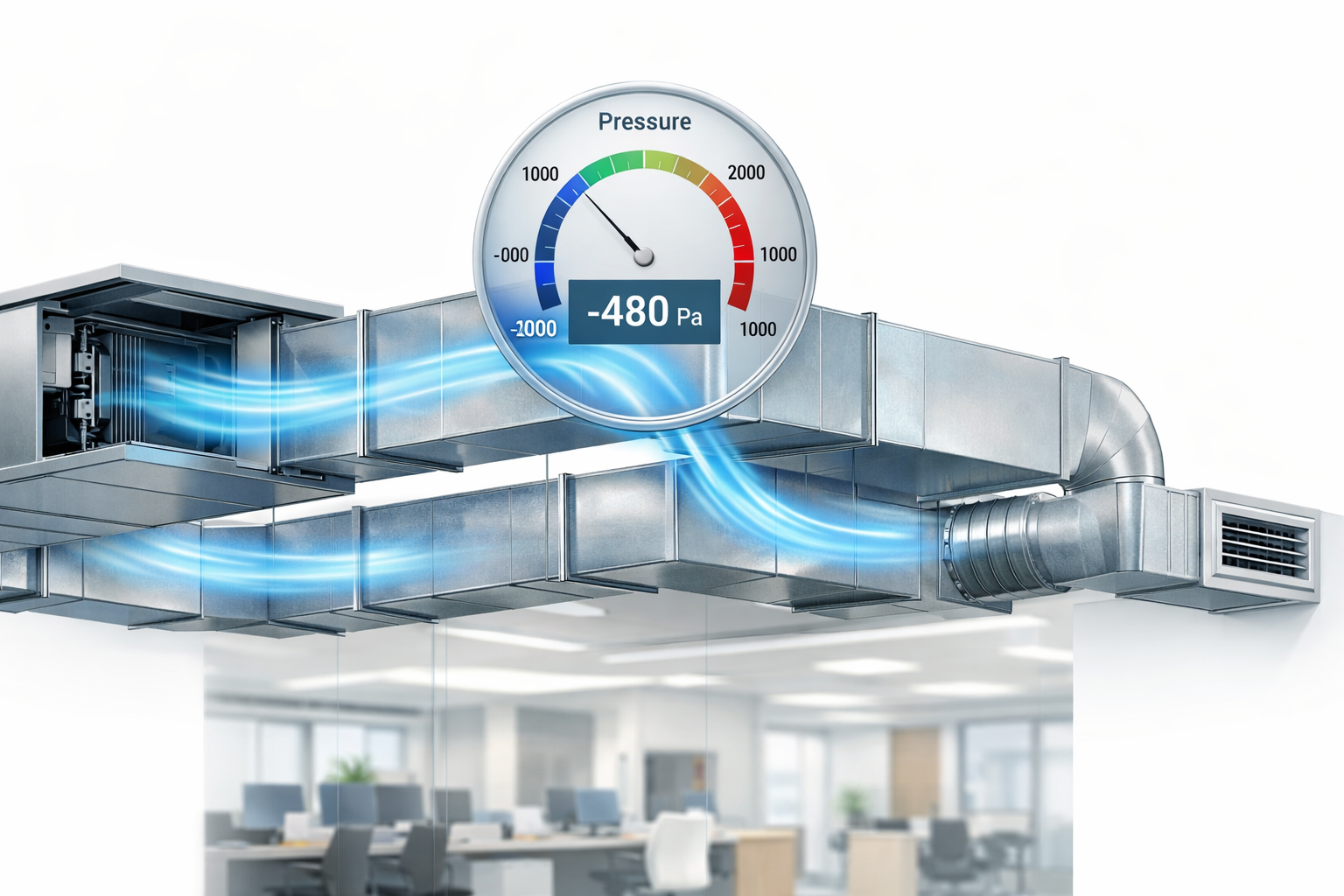
Ensuring balanced air distribution is vital for optimal indoor air quality and comfort. Regular monitoring of airflow rates will help maintain the desired quantities across different zones within a building. This involves assessing static pressure and verifying that the supply and return air align with the intended designs. Adjustments may involve tweaking dampers or fan settings to optimize performance. Additionally, installing sensors can enhance your monitoring capabilities, providing real-time feedback on airflow and system efficiency. These strategies not only maintain comfortable environments but also improve energy efficiency, reducing overall consumption.
Step 5: Routine Checks for Maintenance and Safety
Regular maintenance checks are essential for ensuring the reliability and safety of an air handling unit (AHU). Inspecting filters, verifying the cleanliness of components, and ensuring that sensors are functioning correctly minimizes the risk of malfunctions. Periodically evaluate the operation of the blower and dampers to maintain optimal air distribution and airflow efficiency. Additionally, checking for leaks in the ductwork and ensuring proper drainage from the drain pan can significantly enhance performance and indoor air quality. Routine checks also contribute to energy efficiency, reducing operational costs over time.
Practical Insights: Commissioning and Maintaining AHUs
Practical insights during the commissioning and maintenance of air handling units (AHUs) can greatly enhance their performance and longevity. Understanding the specific needs of commercial and industrial environments is essential for optimizing energy efficiency. Regular inspections, focusing on air cleanliness and filter integrity, ensure the smooth functioning of the system. Maintaining proper airflow and moisture levels is also critical for indoor air quality.
- Consider installation in areas with easy access for maintenance.
- Regularly calibrate control sensors for accurate monitoring.
- Optimize fan speed settings to achieve energy savings.
Installation Considerations for Indian Commercial Projects
Several factors are crucial when planning air handling unit (AHU) installations in Indian commercial projects. The specific climatic conditions often warrant robust cooling systems, thus influencing the selection of coils and fans. Adequate space must be allocated to ensure proper airflow and maintenance access. Additionally, integrating energy-efficient controls can enhance overall energy consumption management. Planning should also consider noise reduction and vibration isolation to comply with local standards. Project teams must prioritize compliance with safety regulations and efficiency guidelines for optimal HVAC performance.
Routine Maintenance Best Practices for AHUs
Regular maintenance is essential for optimal performance and longevity of air handling units (AHUs). Checking filters frequently ensures air cleanliness and efficiency, preventing dust build-up that can hinder airflow. Inspections of cooling and heating coils should be conducted to identify leaks or corrosion, while damper functionality ensures proper airflow regulation. Additionally, verifying fan operations keeps air distribution consistent. Routine checks of control sensors ascertain accurate humidity and temperature readings, minimizing energy consumption. Documenting all maintenance activities not only aids compliance but also highlights patterns that can optimize the entire HVAC system.
Energy Efficiency Tips and Optimization Strategies
Implementing energy efficiency strategies for air handling units can significantly reduce operational costs. Start by utilizing variable air volume (VAV) systems, which optimize airflow based on occupancy. Regularly maintaining filters, particularly HEPA filters, ensures better air quality and decreases energy consumption. Incorporating advanced controls, such as smart thermostats, allows for precise temperature management. Consider adding heat recovery systems to reclaim energy from exhaust air, thereby enhancing efficiency. Lastly, selecting the right size for HVAC components prevents excessive energy use while maintaining effective air distribution throughout different zones.
Conclusion
Understanding the air handling unit (AHU) and its working principle is crucial to maintaining optimal indoor air quality and comfort in various environments. By mastering the concepts of air intake, filtration, temperature control, humidity management, and efficient air distribution, HVAC professionals can significantly enhance system performance and energy efficiency. Regular maintenance, including checking filters and ensuring proper airflow, will prolong the life of the AHU, mitigate downtime, and reduce energy costs. Implementing best practices and utilizing smart controls will further optimize operations and adapt to specific needs in differing applications.
Frequently Asked Questions
What is the basic working principle of an AHU?
An air handling unit (AHU) operates by circulating and conditioning air through various components. It draws in outdoor and return air, filters it, adjusts temperature and humidity levels, and distributes the conditioned air throughout indoor spaces, ensuring optimal comfort and air quality.
How does filtration work in an AHU system?
Filtration in an AHU system involves multiple filter stages that capture particulates and contaminants from both outdoor and return air. This process ensures clean, breathable air circulates within the space, enhancing indoor air quality and protecting equipment from dust and debris.
What safety features are included in modern AHUs?
Modern air handling units (AHUs) incorporate several safety features, such as fire and smoke dampers, emergency shut-off controls, and airflow sensors. These elements ensure the safe operation of AHUs, prevent hazardous conditions, and protect both the equipment and indoor air quality.
Why is regular maintenance essential for AHU performance?
Regular maintenance is crucial for an air handling unit (AHU) to ensure optimal performance, enhance energy efficiency, and prolong its lifespan. Routine checks prevent costly breakdowns, maintain air quality, and ensure that heating or cooling systems operate effectively, creating a comfortable indoor environment.
What are the three phases of AHU?
The three phases of an Air Handling Unit (AHU) are air intake, where outdoor and return air is drawn in; conditioning, which involves filtration, heating/cooling, and humidity control; and distribution, ensuring the conditioned air flows efficiently into indoor spaces.
What is the difference between AHU and HVAC?
An Air Handling Unit (AHU) is a specific component within an HVAC system, responsible for regulating and circulating air. In contrast, HVAC (Heating, Ventilation, and Air Conditioning) encompasses the entire system that manages indoor climate and air quality, including various components like AHUs.
What are the two types of AHU?
The two main types of air handling units (AHUs) are packaged AHUs, which contain all components in a single unit and are usually installed outdoors, and modular AHUs, which consist of separate sections that can be customized for various applications, offering flexibility in design.
What is CFM in AHU?
CFM, or cubic feet per minute, measures the airflow rate in an air handling unit (AHU). It indicates how much air the AHU can move and is crucial for ensuring proper ventilation, temperature control, and indoor air quality within HVAC systems.