...

Flue Gas Scrubber System manufacturing for Chemical & Process Plants

Trusted industrial flue gas scrubber backed by Enviguard’s 10+ years of application-specific emission control engineering.

Enviguard’s Flue Gas Scrubber System is a counter-flow packed bed or spray tower unit engineered to treat SO₂, HCl, HF, and particulates from industrial process stacks. The system integrates an MS/SS inlet quench section, PP/FRP main scrubber body, PP or ceramic packing, high-temperature alloy inlet for gas streams above 200°C, and dedicated CEMS tapping points designed and manufactured in-house for verifiable emission compliance.

yes

CPCB Compliant Design

oil factory

75+ Systems Installed

production

In-House Manufacture

protection

Performance Guaranteed

yes

CPCB Compliant Design

oil factory

10+ Years in Emission Control

production

In-House Manufacture & QC

protection

Pan-India Installation

Envigaurd at a Glance

50+

Systems Installed

Flue gas and wet scrubber systems commissioned across India

10+

Years Experience

Decade-long track record in industrial air pollution control

40+

Clients Served

Chemical, pharmaceutical, ceramic, and process industry clients

18+

States Covered

Pan-India execution with regional service support teams

99%+

Removal Efficiency

Up to 99% SO₂/HCl removal verified by third-party stack tests

6 Wks

Avg. Commissioning

From PO to first-stack-test-ready commissioning for standard units

What Is a Flue Gas Scrubber System?

A Flue Gas Scrubber System is a counter-flow packed bed or spray tower scrubber that treats hot, contaminant-laden exhaust gas discharged from industrial stacks after combustion or chemical reaction. As a stack gas pollution abatement unit, it works by directing flue gas upward through a bed of structured PP or ceramic packing, counter-current to a caustic soda (NaOH) or lime slurry scrubbing liquid flowing downward. This liquid chemically absorbs SO₂, HCl, and HF with high mass-transfer efficiency; a mist eliminator at the scrubber outlet then captures entrained liquid droplets before clean gas exits to the atmosphere.

Industrial operations in chemical manufacturing, captive power boilers, acid plant tail gas treatment, incinerator off-gas, and waste solvent combustion emit significant concentrations of SO₂, HCl, HF, and fine particulates. Left untreated, these pollutants exceed CPCB/MoEF&CC stack emission standards, trigger consent-to-operate (CTO) violations, and expose nearby workers and communities to corrosive acid gases. As a combustion exhaust treatment system, Enviguard’s scrubber brings your stack into compliance with IS 11255 emission monitoring requirements and EIA/EC conditions without unplanned shutdowns or consent revocations.

Enviguard engineers each wet flue gas scrubber system to match your actual process parameters inlet temperature, moisture content, gas volume, and SO₂/HCl/HF loading. The inlet quench section is fabricated from mild steel or stainless steel for mechanical strength and corrosion control. The main scrubber vessel is manufactured in PP (polypropylene) or FRP (fibreglass-reinforced plastic) for long-term acid resistance. Where inlet gas temperatures exceed 200°C, high-temperature alloy internals protect structural integrity. CEMS (Continuous Emission Monitoring System) tapping points are provided at the inlet and outlet as standard, ensuring your stack is always monitoring-ready. Every component is designed and manufactured in-house at Enviguard’s facility no outsourcing, no quality gaps.

The result is a flue gas treatment system that consistently meets or beats mandated outlet concentrations, provides a documented performance guarantee backed by stack test reports, and operates with low pressure drop and minimal maintenance intervention. If you are planning a new installation or upgrading an ageing scrubber system to meet tightened emission norms, contact Enviguard for a technical sizing assessment.

Technical Specifications

Representative parameters for Enviguard’s Flue Gas Scrubber System. All values are configurable to your specific process conditions. Site-specific sizing available on request.

PARAMETER TYPICAL VALUE / RANGE
Scrubber Type Counter-flow packed bed tower / Spray tower (process-dependent)
Scrubber Body Material PP (Polypropylene) or FRP (Fibreglass-reinforced plastic)
Inlet Quench Section Material MS (IS 2062) or SS 304/316 depending on gas composition
High-Temperature Inlet High-temperature alloy internals for gas inlet >200°C
Packing Media PP Pall rings / Saddles or ceramic packing; 25-50 mm nominal size
Gas Flow Rate 500 Nm³/h - 50,000 Nm³/h (custom-designed beyond this range)
Inlet Gas Temperature Ambient - 400°C (after quench, 40-65°C at packed bed inlet)
Inlet SO₂ / HCl / HF Concentration Up to 5,000 mg/Nm³ (higher loadings on request)
Liquid-to-Gas (L:G) Ratio 2-5 L/Nm³ (adjusted for inlet contaminant loading)
Pressure Drop across Packing 15-60 mm WC (design-dependent; minimised for induced-draft fans)
SO₂ / HCl Removal Efficiency Up to 99% (stack-test verified; varies with inlet loading and L:G ratio)
Scrubbing Reagent NaOH (caustic soda) solution or Ca(OH)₂ (lime) slurry
Flange Standard IS 1538 / ANSI 150# (as per project specification)
CEMS Provision Inlet and outlet tapping nozzles provided as standard
Installation Type Skid-mounted (factory-tested) or field-erected (for larger units)

Hot Gas Ready

Inlet quench conditioning handles gas streams up to 400°C before entry to the packed bed no external pre-cooler required for most applications.

Guaranteed Performance

Removal efficiency stated in the purchase order is backed by a contractual performance guarantee, validated by a third-party stack test report at commissioning.

Monitoring-Ready

Standard CEMS tapping points at inlet and outlet allow immediate connection of online SO₂, HCl, and opacity analysers per IS 11255 and CPCB guidelines.

Engineering Features of Enviguard's Scrubber

protection

Designed for Actual Flue Gas

Scrubber internals, L:G ratio, and packing height are sized for your specific inlet temperature, moisture content, and SO₂/HCl/HF loading — not generic catalogue assumptions

High-Efficiency Packed Bed

Structured PP or ceramic packing delivers high mass-transfer area per unit volume, driving SO₂ and HCl removal efficiencies up to 99% across a compact tower height.

reload

Closed-Loop Recirculation

Integral recirculation tank and pump minimise fresh reagent consumption and reduce effluent volume, lowering operating costs throughout the scrubber's service life..

droplet

Integral Mist Eliminator

PP chevron or mesh-pad mist eliminator is factory-fitted above the packed section, capturing liquid droplets >5 µm and preventing carryover to downstream ductwork and stack.

mist

Skid-Mounted or Field-Erected

Units up to ~10,000 Nm³/h are factory-assembled on a common structural skid, reducing site civil work and commissioning time to as little as six weeks from PO.

bars

Low Pressure Drop Design

Packing selection and tower sizing optimise pressure drop (typically 15-60 mm WC), allowing integration with existing induced-draft or forced-draft fans without upsizing.

shipping

Corrosion-Resistant Construction

PP and FRP vessel materials resist concentrated acid gas environments for >15 years of service life, eliminating the corrosion failures common in MS-lined systems.

spanner

Easy Maintenance Access

Bolted access doors, removable packing sections, and standardised nozzle connections enable inspection, packing replacement, and nozzle cleaning without vessel entry or cutting.

oil tanker

CEMS Tapping Provision

Dedicated inlet and outlet sample-extraction nozzles are provided as standard, pre-positioned per CPCB and IS 11255 requirements for straightforward analyser installation.

Working Principle of the SO2 Scrubber

01

Full Regulatory Compliance

Meets CPCB/MoEF&CC stack emission standards, IS 11255 monitoring norms, EIA/EC conditions, and CTO stack norms verified by contractual stack test reporting, so your consent to operate is never at risk.

02

Worker & Community Safety

Removing SO₂, HCl, and HF from your plant’s exhaust eliminates the chronic respiratory and eye-irritation hazards that these acid gases pose to workers in the surrounding process area and residential community.

03

Uninterrupted Production

A compliant, well-designed flue gas scrubber for chemical plant operations prevents the regulatory enforcement actions and emergency shutdowns that frequently follow failed stack tests, protecting your production schedule.

04

Low Total Cost of Ownership

Corrosion-resistant PP/FRP construction, efficient recirculation design, and low pressure drop significantly reduce reagent consumption, energy costs, and maintenance expenditure compared to metal-bodied alternatives.

05

Fast, Low-Disruption Installation

Skid-mounted units arrive factory-tested, reducing site civil and mechanical work. Standard commissioning in six weeks from PO means your stack is compliant with minimum production interruption.

06

Verified Environmental Performance

Third-party stack test reports at commissioning provide documented evidence of emission levels, supporting your ESG reporting, environmental audit submissions, and ISO 14001 programme requirements.

07

Adaptable to Process Changes

The modular packed bed design accommodates future increases in gas volume or contaminant loading through packing replacement, nozzle reconfiguration, or tower extension without replacing the entire scrubber.

08

Enviguard After-Sales Support

From annual maintenance contracts (AMCs) to emergency field service and reagent optimisation audits, Enviguard’s in-house technical team supports your scrubber throughout its operational life across 18+ Indian states.

Working Principle of Flue Gas Scrubbing

Technology Overview

Enviguard’s Flue Gas Scrubber System operates on proven counter-flow wet absorption chemistry. Hot, contaminant-laden flue gas enters the inlet quench section where direct-contact liquid spray reduces gas temperature to safe scrubber-operating levels (typically 40-65°C) before the gas passes into the packed bed. Inside the main scrubber vessel a recognised stack gas pollution abatement unit the gas travels upward through a deep bed of high-surface-area PP or ceramic packing, while caustic soda or lime scrubbing liquor is continuously recirculated downward through the same packing.

The counter-flow arrangement maximises contact time and driving force between gas-phase contaminants (SO₂, HCl, HF) and the alkaline scrubbing liquid. Chemical absorption reactions neutralise acid gases, forming soluble sulphite/sulphate and chloride salts that are carried away in the blowdown stream to the effluent treatment plant. This combustion exhaust treatment system is engineered to achieve up to 99% removal of target pollutants, as verified by independent stack testing at commissioning.

Above the packed bed, an integral mist eliminator removes entrained liquid droplets before the clean gas is discharged to the atmosphere through the stack. CEMS tapping nozzles at inlet and outlet enable continuous monitoring, meeting CPCB’s online emission tracking requirements and providing auditable compliance data.

Step-by-Step Process

1

Hot flue gas exits the stack vent or process exhaust point at temperatures up to 400°C, carrying SO₂, HCl, HF, and particulate matter.

2

Gas enters the MS/SS inlet quench section where direct spray cooling reduces temperature to 40-65°C before the packed bed, preventing thermal damage to PP/FRP internals.

3

Quench liquid is collected in the sump and recirculated; a blowdown stream controls solids build-up and maintains stable quench pH.

4

Cooled gas enters the base of the PP/FRP packed bed tower and flows upward through the high-surface-area packing at the design face velocity.

5

NaOH or Ca(OH)₂ scrubbing liquor is pumped to the top of the packed section and distributed evenly across the packing by spray nozzles or liquid distributors.

6

Counter-flow contact in the packed bed drives chemical absorption of SO₂, HCl, and HF into the alkaline liquid film on packing surfaces; neutralisation reactions proceed to near-completion.

7

Spent scrubbing liquor now containing sulphite, sulphate, and chloride salts drains to the recirculation tank; fresh reagent is auto-dosed to maintain target pH (typically 8-11).

8

A controlled blowdown from the recirculation tank purges accumulated salts to the effluent treatment plant, preventing scrubbing liquid degradation and scaling.

9

Clean gas rises through the integral PP mist eliminator, which captures entrained droplets >5 µm, preventing liquid carryover into the outlet duct and stack.

10

Treated gas passes through CEMS outlet tapping nozzles enabling continuous online SO₂/HCl measurement before discharge to atmosphere at CPCB-compliant emission levels.

Flue Gas Scrubber Applications Across Sectors

Enviguard’s industrial flue gas scrubber is engineered for specific process conditions across the following sectors. Each installation is preceded by application review and inlet characterisation.

chemicals

Chemical Process Plants

Acid mist, HCl vapour, and SO₂ from chlorination, sulphonation, and esterification process vents are controlled by this flue gas scrubber for chemical plant stacks, keeping outlet emissions below CPCB consent conditions.

industrial park

Captive Boilers (Flue Gas)

Sulphur-bearing liquid fuels or coal combustion in captive utility boilers generates SO₂-rich flue gas. Our industrial boiler flue gas scrubber handles high-volume, low-concentration SO₂ streams for CPCB stack compliance.

info

Acid Plant Tail Gas

Sulphuric acid plant absorption towers leave residual SO₂ in tail gas. Enviguard's packed bed flue gas acid gas scrubber achieves tail-gas SO₂ reduction to below 200 mg/Nm³ per CPCB norms.

production line

Chemical Sector Incinerators

Off-gas from rotary kiln or liquid injection incinerators treating chemical waste carries HCl, SO₂, and HF. Our flue gas emission control scrubber treats multi-component acid gas from this demanding combustion source.

assembly

Waste Solvent Combustion

Halogenated solvent combustion generates HCl and HF-laden exhaust that requires a dedicated wet flue gas scrubber system with caustic scrubbing reagent to meet incinerator stack emission limits under EIA conditions.

electric factory

Thermal Desorption Units

Soil and sludge thermal desorption off-gas carries particulates and acid gases from the high-temperature treatment process. Enviguard's flue gas desulfurization scrubber treats desorber exhaust before safe atmospheric discharge.

oil refinery

Pharmaceutical Manufacturing

Reactor vents, dryer exhausts, and synthesis off-gases in API and formulation plants contain HCl and solvent vapours requiring a flue gas acid gas scrubber to meet environmental consent stack norms.

planning

Ceramic & Mineral Processing

Kiln and dryer exhausts from ceramic, refractory, and mineral processing facilities emit fluoride compounds (HF) that are effectively abated by Enviguard's packed bed industrial flue gas scrubber.

chip

Specialty Chemical Reactors

Batch reactor off-gas during chlorination, nitration, and other specialty processes generates episodic high-concentration HCl and SO₂ that this acid gas control in flue exhaust system is designed to safely capture.


Typical Use Cases for Flue Gas Scrubber Systems

The following scenarios illustrate how Enviguard’s system is applied in the field. These are typical application scenarios based on application type, not specific client case studies.

Typical Application Scenario

Chlorination Reactor Vent Chemical Plant

Challenge

HCl concentrations of 2,000-4,000 mg/Nm³ in batch reactor off-gas; CPCB consent limit of 50 mg/Nm³; existing CS absorber failing stack test.

Solution

Two-stage PP packed bed scrubber with NaOH recirculation, pH-controlled blowdown, and CEMS tapping at outlet; sized for 3,000 Nm³/h peak flow.

Typical Application Scenario

Captive Coal Boiler - SO₂ Compliance

Challenge

SO₂ at 1,500-2,200 mg/Nm³ from 8 TPH coal-fired boiler; new CPCB 2015 emission standard requiring <600 mg/Nm³; no existing abatement.

Solution

Single-stage spray tower flue gas scrubber with lime slurry scrubbing, mist eliminator, and forced-draft fan integration; skid-mounted for fast installation.

Typical Application Scenario

Chemical Waste Incinerator Off-Gas Treatment

Challenge

Multi-component HCl + SO₂ + HF mixture from rotary kiln incinerator; highly variable loading; EIA condition mandating outlet HCl <60 mg/Nm³ and SO₂ <200 mg/Nm³.

Solution

Quench tower + two-stage packed bed scrubber with high-temperature alloy inlet internals; dual-reagent NaOH dosing with online pH control and CEMS provision.

Typical Application Scenario

Sulphuric Acid Plant Tail Gas Abatement

Challenge

Residual SO₂ in absorption tower exit gas at 1,000–1,800 mg/Nm³; consent limit of 200 mg/Nm³; continuous 24×7 operation with no process shutdown tolerance.

Solution

PP packed bed flue gas desulfurization scrubber with caustic recirculation, auto-blowdown, and online SO₂ analyser integrated into CEMS at outlet nozzle.

Typical Application Scenario

Ceramic Kiln Exhaust HF Control

Challenge

HF at 300-600 mg/Nm³ from tunnel kiln exhaust in ceramic tile manufacturing; consent limit 5 mg/Nm³; existing dry scrubber underperforming.

Solution

Two-stage FRP packed bed scrubber with NaOH reagent, mist eliminator, and retrofit connection to existing ID fan; CEMS tapping at outlet for real-time HF monitoring provision.

Typical Application Scenario

Thermal Desorption Unit Off-Gas

Challenge

High-temperature off-gas (>250°C) from contaminated soil TDU with particulates and acid gases; EIA mandated treatment before discharge; intermittent operation.

Solution

Hot-gas quench section with high-temperature alloy inlet + single-stage PP packed bed scrubber; sized for peak and turndown gas flow; skid-mounted for site portability.

Have a specific application? Our engineers evaluate your process data and recommend the right flue gas treatment system configuration.

Trusted by Chemical & Process Industry Leaders Across India

image 400x200 6
image 400x200 8
image 400x200 13
image 400x200 22
image 400x200 15
image 400x200 17
image 400x200 7
image 400x200 4
image 400x200 12
image 400x200 10
image 400x200 3
image 400x200 24
image 400x200 9
image 400x200 20
image 400x200 25
image 400x200 5
image 400x200 23
image 400x200 27
image 400x200 26
image 400x200 32
image 400x200 29 removebg preview
image 400x200 31
image 400x200 1
image 400x200 2
image 400x200 6
image 400x200 8
image 400x200 13
image 400x200 15
image 400x200 22
image 400x200 17
image 400x200 7
image 400x200 4
image 400x200 12
image 400x200 10
image 400x200 3
image 400x200 24
image 400x200 9
image 400x200 20
image 400x200 25
image 400x200 5
image 400x200 23
image 400x200 27
image 400x200 26
image 400x200 32
image 400x200 29 removebg preview
image 400x200 31
image 400x200 1
image 400x200 2

How Enviguard Delivers Your Scrubber System

Enviguard’s in-house team manages every stage from process review to post-commissioning support no subcontracting, no handoffs, no quality gaps. Here is how a typical project progresses.

01

Design & Engineering

Our engineers receive your process data gas volume, temperature, contaminant concentrations, and site layout and perform application-specific sizing of the quench section, packed bed, L:G ratio, packing height, and fan requirements. With 10+ years of flue gas scrubber projects, our design team identifies the critical parameters others miss.

02

Manufacture & Quality

All fabrication PP/FRP vessel, MS/SS quench section, skid structure, and recirculation tank is performed in-house at Enviguard’s manufacturing facility. Quality checks are embedded at each fabrication stage: dimensional inspection, weld testing, hydraulic pressure testing, and packing installation verification before dispatch.

03

Installation & Commissioning

Enviguard’s own installation team supervises or executes erection, civil interface, piping, and electrical hook-up at your plant. Commissioning is carried out systematically from wet run and reagent dosing calibration to CEMS connection and third-party stack test coordination. Standard commissioning for skid-mounted units in six weeks from PO.

04

Maintenance & Support

Post-commissioning, Enviguard offers structured Annual Maintenance Contracts (AMC) covering scheduled inspections, packing condition checks, nozzle cleaning, pH probe calibration, and reagent consumption optimisation. Our technical helpdesk provides remote diagnostics, and field engineers are deployable across 18+ states for emergency support.

Why Choose Enviguard for Your Flue Gas Scrubber System

cup

10+ Years of Flue Gas Expertise

Over a decade of application-specific flue gas scrubber projects for chemical, pharmaceutical, and process industries, with 500+ systems in operation and a documented track record of stack test success.

refresh

Full In-House Lifecycle

Design, manufacture, installation, and maintenance all executed by Enviguard's own engineering team. No subcontracting means single-point accountability and consistent quality from enquiry to AMC.

bullseye

Application-Specific Design

Every scrubber is sized from your actual process data: gas volume, temperature, moisture, and SO₂/HCl/HF loading. We do not apply generic catalogue sizing to your unique flue gas parameters.

test tube

Material Selection Mastery

Deep experience across MS, SS, PP, FRP, and high-temperature alloy materials means your scrubber is built from the right material for the right gas, not the cheapest available option.

map

Pan-India Execution

Enviguard has delivered and commissioned projects across 18+ Indian states, with regional installation and service capabilities that reduce mobilisation time and travel costs for your project.

square

Contractual Compliance Guarantee

Removal efficiency is specified in the purchase order and backed by a performance guarantee. Compliance is verified at commissioning through a third-party stack test report no ambiguity, no excuses.

wrench

AMC & Ongoing Support

Annual Maintenance Contracts, spare parts supply, and remote and on-site technical support keep your scrubber operating at guaranteed performance levels throughout its service life.

analytics

Low Lifecycle Cost

Correct application sizing, corrosion-resistant materials, and reagent optimisation during commissioning collectively reduce the total cost of ownership over the scrubber's 15+ year design life.

Enviguard combines technical depth with end-to-end delivery accountability. When your plant’s compliance, production continuity, and environmental performance depend on the scrubber, you need a manufacturer who stands fully behind the system from first drawing to the tenth year of operation.

SO2 Scrubber vs. Alternative SO2 Control Technologies

Understanding where a wet flue gas scrubber system fits relative to other emission control technologies helps you select the right solution for your specific contaminants and operating conditions.

Evaluation Criterion Flue Gas Scrubber System (Enviguard) Dry Scrubber / Dry Injection Activated Carbon Adsorber Fabric Filter / Bag Filter
SO₂ / HCl / HF Removal Efficiency Up to 99% 60-85% Moderate (for HCl/HF) Not applicable
Inlet Concentration Range Low to very high (up to 5,000+ mg/Nm³) Low to moderate Low to moderate Not applicable for acid gases
Multi-Pollutant Handling (SO₂+HCl+HF) Yes - single unit Partial Selective No
Particulate Removal (co-benefit) Yes - partial Partial No Yes - primary function
Maintenance Frequency Low (quarterly inspection) Medium (reagent handling) Medium (carbon regeneration) High (bag replacement)
CPCB Compliance for Acid Gas Stacks Yes - primary technology Conditional Conditional No (acid gas)
High-Temperature Inlet Capability Yes - up to 400°C with quench section Limited No (<100°C) Limited (<200°C)
Indicative CAPEX Range Moderate - application-specific Low-Moderate Moderate-High Low–Moderate

* Disclaimer: Technology comparison values are indicative and based on typical process conditions. Actual performance depends on inlet gas parameters, reagent selection, and system design. Consult Enviguard for application-specific evaluation.

Regulatory Standards Addressed

bar chart

CPCB / MoEF&CC Stack Emission Standards

Enviguard scrubbers are designed to meet the CPCB's General Standards for Discharge of Environmental Pollutants and sector-specific stack emission norms for SO₂, HCl, HF, and particulates.

oil factory 1

IS 11255 Emission Monitoring

CEMS tapping nozzles are positioned per IS 11255 requirements for stack emission monitoring, enabling correct installation and operation of online analysers and periodic manual sampling.

alert

EIA / EC Conditions

Projects subject to Environmental Clearance conditions receive scrubber designs that explicitly address the stack emission limits specified in the EC document, with performance guarantee documentation for EC compliance reporting.

alert

Consent to Operate (CTO) Stack Norms

Enviguard's stack test reports, generated at commissioning by accredited third-party laboratories, provide the documented evidence required by State Pollution Control Boards for CTO renewal and fresh consent applications.

Enviguard maintains a systematic compliance documentation process: each project is closed with a verified stack test report, CEMS commissioning record, and a regulatory compliance summary document. These are provided to the client for submission to the relevant SPCB or CPCB authority, reducing your compliance documentation burden and eliminating ambiguity about whether your installation meets consent conditions.

Frequently Asked Questions - Flue Gas Scrubber System

A wet flue gas scrubber system using caustic or lime scrubbing reagent effectively removes SO₂, HCl, and HF through chemical absorption. It also provides partial removal of soluble particulates and condensable organics that are present in the gas stream. For HF in particular, counter-flow packed bed systems achieve very high removal efficiencies due to HF's high water solubility. Dry particulate matter is not the primary target of a wet scrubber a separate fabric filter or cyclone upstream may be specified if particulate loading is high.

The inlet quench section uses direct contact with a liquid spray typically water or dilute scrubbing liquor to cool hot flue gas from its process exit temperature (which may be 150-400°C) down to the operating range of the PP/FRP packed bed (typically 40-65°C). This cooling step is essential when PP or FRP construction is used, as these materials have defined temperature limits. It also saturates the gas with moisture, improving SO₂ absorption in the downstream scrubber. Where inlet gas temperature is already below 60°C, the quench section may be simplified or omitted; for high-temperature streams, high-temperature alloy internals may be specified at the quench inlet.

Yes - both SO₂ and HCl are acid gases that are effectively absorbed by alkaline NaOH or lime solution in a packed bed scrubber. A single two-stage unit with optimised pH control in each stage can achieve high removal of both contaminants simultaneously. The challenge is that optimal pH windows for SO₂ and HCl absorption differ slightly; Enviguard addresses this through staged reagent dosing and inter-stage pH control. For very high concentrations of both contaminants, two dedicated packed beds in series may be specified. The process chemistry, inlet concentrations, and required outlet limits determine the final configuration.

Enviguard's standard product range covers gas flow rates from approximately 500 Nm³/h (small process vent) up to 50,000 Nm³/h (large boiler or multi-source combined). Units beyond this range are custom-engineered. For very small flows (<500 Nm³/h), a compact packaged scrubber unit may be appropriate. For flows above 50,000 Nm³/h - typical of large captive power boilers  a custom multi-module or large-diameter tower design is assessed on a project-specific basis. All sizing starts from your actual inlet gas parameters, not a catalogue standard.

For a standard skid-mounted flue gas scrubber unit (up to ~10,000 Nm³/h), Enviguard's typical timeline from purchase order to ready-for-stack-test commissioning is 6–8 weeks. This includes design finalisation (1-2 weeks), in-house fabrication and shop testing (3-4 weeks), dispatch, site installation, and commissioning (1-2 weeks). Larger field-erected units or projects requiring civil construction may have extended timelines discussed and agreed at order stage. Enviguard provides a project schedule at enquiry stage for your planning purposes

Standard scope of supply includes: inlet quench section (MS/SS), main scrubber vessel (PP/FRP), packing media (PP or ceramic), mist eliminator, recirculation tank, recirculation pump(s), spray nozzles and liquid distribution system, structural skid, reagent dosing system, instrumentation (pH, flow, level), CEMS inlet and outlet tapping nozzles, and electrical panel. Optional scope includes ID/FD fan, stack, civil foundation design, CEMS analysers, and annual maintenance contract. Scope is tailored to each project during technical discussion.

The most critical daily monitoring parameters for a flue gas scrubber system are: (1) Scrubbing liquid pH - maintaining the design pH (typically 8-11 for NaOH systems) directly correlates with SO₂/HCl removal efficiency; (2) Recirculation flow rate - reduced flow indicates pump issues or nozzle fouling; (3) Scrubber pressure drop a significant increase suggests packing fouling or mist eliminator blockage; (4) Reagent consumption rate deviations from baseline indicate changes in inlet pollutant loading or pH drift; (5) Blowdown conductivity rising conductivity indicates salts build-up requiring increased blowdown. Enviguard provides a commissioning-stage O&M manual with all target ranges.

At project closure, Enviguard provides: (1) A third-party accredited stack test report confirming outlet concentrations for each target pollutant; (2) A system performance certificate from Enviguard confirming the system meets the guaranteed outlet concentrations; (3) CEMS commissioning record confirming inlet and outlet tapping nozzle installation per IS 11255; (4) Equipment data sheets for the scrubber, pump, and fan for the plant's equipment register; (5) An O&M manual for operator training and inspection records. These documents collectively support your CTO renewal, EIA condition compliance demonstration, and SPCB inspection submissions.

A packed bed flue gas scrubber uses a structured bed of PP or ceramic packing to create a large interfacial area for gas-liquid contact, achieving high mass-transfer rates and removal efficiencies. It is preferred for high concentration acid gases like SO₂, HCl, and HF. A spray tower uses open-spray nozzles without packing; it offers lower pressure drop, easier maintenance, and better tolerance for particulate-laden gas, but is less efficient for gas absorption at high concentration. Enviguard's engineers select the correct configuration based on your inlet gas composition, temperature, and particulate loading. 

The mist eliminator sits above the packed bed section and captures liquid droplets entrained in the upward gas flow before the gas exits to the outlet duct and stack. Without a properly designed mist eliminator, droplets carrying dissolved sulphate, chloride, and caustic salts would be carried into the stack, causing corrosion of downstream ductwork, CEMS analyser fouling, and a visible mist plume from the stack. Enviguard's PP chevron-blade or mesh-pad mist eliminators are sized for the design gas velocity, providing efficient droplet capture while contributing minimally to overall pressure drop.

Accurate sizing requires the following process data: (1) Gas flow rate in Nm³/h at normal and peak conditions; (2) Inlet gas temperature and moisture content; (3) Concentration of each target pollutant - SO₂, HCl, HF in mg/Nm³; (4) Required outlet concentration per CPCB consent or EIA conditions; (5) Particulate loading and nature (sticky, corrosive, etc.); (6) Available reagent type (NaOH or lime) and ETP inlet specification; (7) Available plot area and installation height constraints; (8) Fan availability - induced draft or forced draft. Enviguard provides a Sizing Questionnaire that guides you through data collection. 

In many cases, yes. Skid-mounted units are pre-assembled and require only a foundation pad, inlet duct connection, reagent supply, and power connection. The key constraint is plot space adjacent to the existing stack and the available induced-draft fan static pressure. If the existing fan does not have sufficient static pressure headroom to overcome the scrubber pressure drop (typically 15–60 mm WC), a supplementary booster fan or fan impeller upgrade may be needed. Enviguard's engineers assess your existing fan curve and ductwork layout during the design phase to avoid surprises during installation.

Yes. Enviguard includes a contractual performance guarantee in the purchase order specifying the outlet emission concentration to be achieved (e.g., SO₂ <600 mg/Nm³, HCl <50 mg/Nm³) under the agreed process conditions. This guarantee is verified by a third-party accredited stack test at commissioning. The stack test report is provided to the client for submission to the relevant SPCB or CPCB authority. The specific guarantee parameters are agreed during technical discussion and reflect your consent conditions and EIA emission limits. 

PP packing in a correctly designed and operated wet flue gas scrubber typically has a service life of 8–12 years under normal acid gas service conditions. Packing degradation can occur faster if: (a) scrubbing pH is not maintained within the design range, causing chemical attack; (b) high-temperature gas breaks through the quench section intermittently; or (c) high particulate loading causes progressive fouling. Annual inspection of packing condition is included in Enviguard's AMC programme. Packing replacement, when needed, is facilitated by the bolted access doors provided in Enviguard's design.

Yes - wet packed bed scrubbing is the primary technology recommended and accepted by CPCB for controlling SO₂, HCl, and HF from chemical process and combustion stacks. An Enviguard system designed to your consent conditions, verified by a third-party stack test at commissioning, and operated with correct pH and reagent dosing will achieve and maintain CPCB emission standards. IS 11255 monitoring provisions are designed in as standard, supporting the continuous emission monitoring increasingly required by SPCB for large chemical and process installations. 

Ready to Bring Your Stack Into Compliance?

Share your flue gas parameters with our engineers. We’ll size the right system and issue a formal technical quotation within 5 working days.

Technical Downloads

Access product data, sizing tools, and compliance guidance for Enviguard’s Flue Gas Scrubber System.

documents

Full Gate - Form Required

Technical Datasheet - Flue Gas Scrubber System

Complete technical datasheet covering construction specifications, materials of construction, performance data, dimensional outlines, and options list. Required details collected before download.

clipboard

Soft Gate - Email Only

Scrubber Sizing Questionnaire

A structured form to capture your process gas parameters  flow rate, temperature, contaminant concentrations, reagent type, and plot constraints enabling Enviguard to prepare an accurate technical proposal.

institution

Open - No Gate

Enviguard Company Brochure

Overview of Enviguard’s product range, industry experience, manufacturing capabilities, and project portfolio across industrial air pollution control for chemical, pharmaceutical, and process industries.

bar chart

Open - No Gate

CPCB Compliance Guide for Stack Emissions

A practical reference covering CPCB/MoEF&CC stack emission standards for SO₂, HCl, and HF, IS 11255 monitoring requirements, CTO stack norm compliance, and the role of wet scrubbing in meeting these limits.

Related Products & Services

Enviguard’s HCl scrubber integrates with a complete portfolio of corrosive and acid gas emission control systems.

PPFRP Scrubber

Exhaust Gas Scrubber

Compact packed bed or venturi scrubber for process exhaust gas streams ammonia, chlorine, acid mist at lower temperatures than typical flue gas applications.

Chemical / Pharma

Scrubber System

Industrial Wet Scrubber

General-purpose wet scrubber for particulate, dust, and acid gas control across chemical processing, food, and mineral applications where a single-unit solution is required.
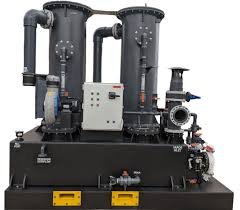
Multi-industry

Caustic Scrubber for Chlorine Gas: High-Capacity Chemical Absorption

SO₂ Scrubber

Dedicated high-efficiency SO₂ removal system for sulphuric acid plant tail gas, power boilers, and DG set flue gas, optimised specifically for sulphur dioxide absorption chemistry.

Acid Plant / Boiler

Gas Scrubbers

Hybrid Scrubber System

Combines wet scrubbing with dry-stage pre-treatment or HEPA filtration for complex multi-pollutant gas streams requiring both particulate and acid gas control in a single integrated system.

Multi-pollutant

ammonia scrubber manufacturer

Scrubber Annual Maintenance Contract

Structured AMC programme covering scheduled inspection, packing assessment, nozzle cleaning, pump servicing, pH calibration, and regulatory readiness review for all Enviguard scrubber systems.

Service

Scrubber System

Scrubber Retrofitting & Upgrades

Assessment and upgrade services for ageing or underperforming third-party scrubber systems packing replacement, nozzle upgrade, fan modification, and CEMS provision installation. Retrofit

ALL INDUSTRIES

HCl Scrubber Guides & Technical Articles

Practical knowledge from Enviguard’s application engineers helping you specify, install, and maintain HCl emission control systems.

How-To Guide

How to Select the Right Flue Gas Scrubber for Your Chemical Plant 

A step-by-step guide to characterising your flue gas parameters, selecting between packed bed and spray tower configurations, and specifying materials of construction for acid gas service.

Technical

8 min read

Buyer's Guide

Industrial Flue Gas Scrubber Buyer’s Guide: 10 Questions to Ask Before You Order

Key technical and commercial questions procurement engineers should ask a flue gas scrubber manufacturer: performance guarantees, material standards, CEMS provision, and commissioning scope.

Procurement

10 min read

Compliance Guide

CPCB Stack Emission Standards for SO₂ and HCl: What Chemical Plants Need to Know in 2025

Updated review of CPCB/MoEF&CC stack emission limits for SO₂, HCl, and HF, IS 11255 monitoring requirements, and the practical implications for chemical plant consent-to-operate compliance.

Regulatory

7 min read

Technology Comparison

Wet Flue Gas Scrubber vs. Dry Scrubber: Which Is Right for Your Acid Gas Application?

A technical comparison of wet packed bed scrubbing versus dry injection and dry scrubbing for SO₂ and HCl removal covering removal efficiency, water use, operating cost, and CPCB compliance suitability.

Technology

9 min read

Maintenance Guide

Flue Gas Scrubber Maintenance Checklist: Keeping Your System Stack-Test Ready Year-Round

A practical maintenance checklist for plant operators covering daily monitoring parameters, quarterly inspection tasks, annual packing assessment, nozzle cleaning, and pre-stack-test readiness review.

Operations

6 min read

Contact Us

Ready To Start Your Industrial Transformation?

Reach out to us now.

Follow Us

Scroll to Top

Get Expert Consultation for Industrial Wet Scrubber Systems


Need a Reliable HVAC Contractor for Your Facility? Get Expert Support